LibreInfra Newsletter
Ownable Infrastructure Dispatch: Storage, Recovery and Data Ownership
A LibreInfra dispatch separating storage, backup, archive and data ownership into practical architecture decisions.

Ownable Infrastructure Dispatch: Storage, Recovery and Data Ownership
I chose storage for this Ownable Infrastructure Dispatch because the word is doing too much work.
Teams use it for live application state, analytical files, database services, replicas, backups and records kept for years. Then they compare the products attached to those layers as though the labels described the same decision.
They do not.
Live storage must serve a workload. Backup must reconstruct an acceptable state after failure. Archive must preserve an authoritative record with its meaning and retention controls intact. The same platform can participate in all three, but each responsibility still needs its own owner, failure model and proof.
This issue starts there.
The main guide
Storage, backup and archive are different decisions
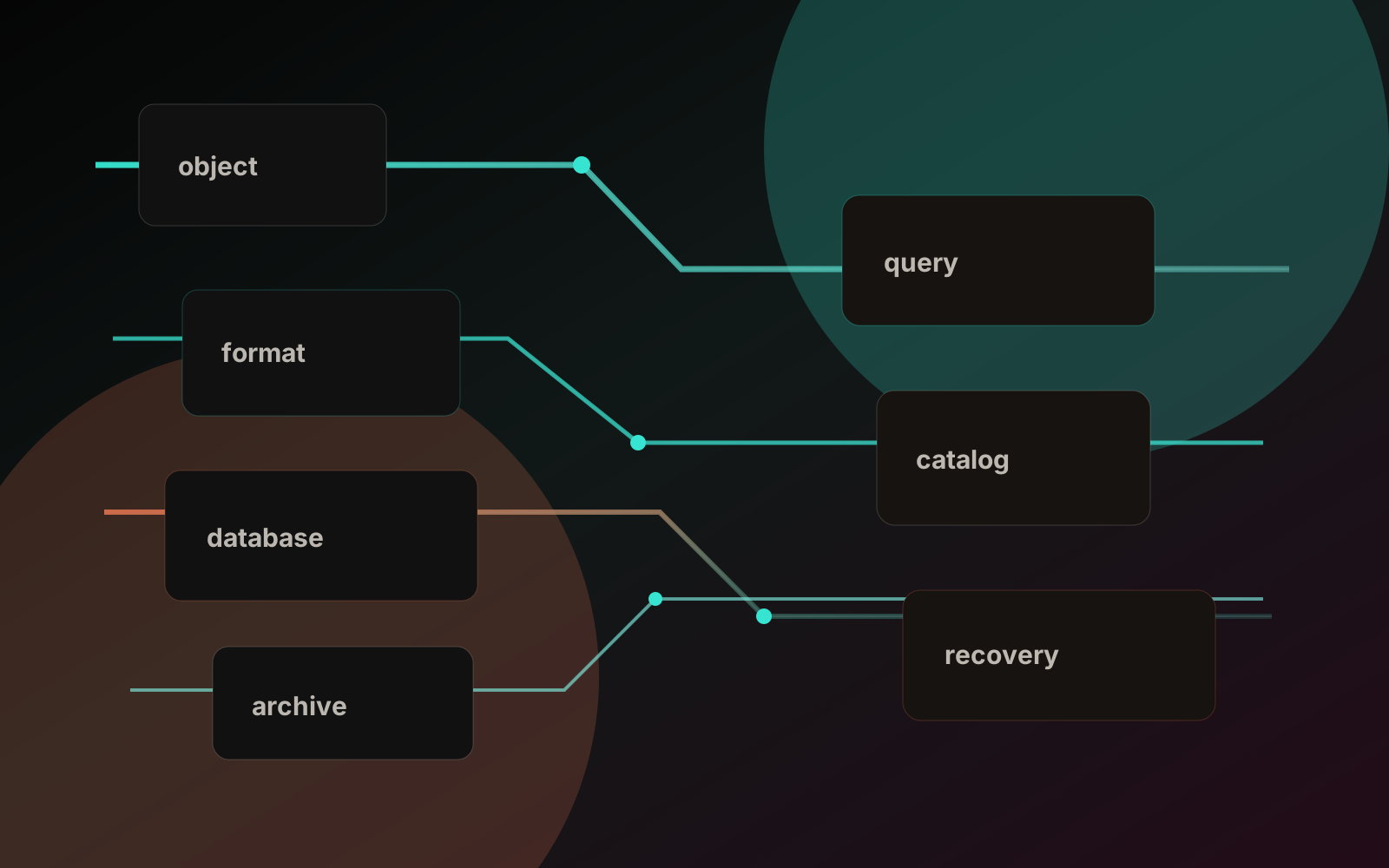
The guide maps the layers that are commonly compressed into a single storage conversation: object, block and file interfaces; operational databases; lakes, lakehouses and warehouses; file and table formats; query engines; catalogues; recovery; archive; and the control plane around them.
It also puts familiar terms in their proper place. S3, PostgreSQL, Redis, Kafka, OpenSearch, vector databases, Parquet, Iceberg and Snowflake do not name interchangeable choices. They describe different interfaces, behaviours, formats and service boundaries.
The useful question is not which name wins. It is which responsibility the component carries, which state it is authoritative for and what evidence shows that it can be operated, recovered or replaced.
The field note
Why storage decisions fail when teams compare products instead of layers
The field note takes a firmer position: a product comparison made before a responsibility map is usually premature.
“S3 versus Snowflake” mixes a storage interface with an integrated analytical platform. “Data lake versus backup” mixes an analytical architecture with a recovery system. “Cold storage versus archive” mixes a cost tier with long-term authority, readability and disposal.
The answer may still be an integrated service. Integration is not the problem. Unexamined responsibility is.
The client pattern, held back for now
A layered data architecture review checklist is being prepared as a future customer-only resource. It turns the argument into a working method: inventory where bytes live, identify authority and control, trace access paths, test recovery, review archive readability and attach evidence to every important claim.
It is included in the source package as draft material, but it is not linked as a public resource and is not part of this issue’s public content list. The site’s customer-only gate should exist before the checklist is promoted.
Why begin here?
Data ownership becomes visible when something goes wrong.
Can the organisation restore without trusting the damaged environment? Can it still read retained records after the original application changes? Can it export the data together with the metadata that gives it meaning? Can another competent team operate the system from the runbooks and evidence available?
Those questions matter before an incident as well. They shape platform design, supplier dependency, auditability and the freedom to change direction. They also matter for AI systems, which inherit the quality, provenance, access controls and recoverability of the data foundations beneath them.
Ownable infrastructure does not require every component to be self-hosted. It requires a clear account of what has been delegated, what remains controlled and how the organisation proves the difference.
One question for the next architecture review
For every important copy of data, ask:
What responsibility does this copy serve, which failure does it survive, who controls it, and what evidence proves it can be used?
A precise answer will usually classify the copy as live state, replica, derived data, recovery history or archive record.
An imprecise answer has found the next piece of architecture work.
— Jose
Related reading
Continue from here
Storage, backup and archive are different decisions
A practical LibreInfra guide to classifying storage, databases, lakehouses, backup, archive and data-platform layers.
Read more
Why storage decisions fail when teams compare products instead of layers
A LibreInfra field note on the category errors behind storage, data platform, backup and archive decisions.
Read moreMake the next decision with clarity